
So many women come into the showroom every week bragging to me about how they only buy secondhand, mostly from Vinted. Then I just stare at them smiling without saying anything because I don’t want to scare them away.
Here’s what I’m really thinking.
Vinted is a tease
I’ve never actually bought anything on Vinted. But I have very strong feelings about it (and recommerce in general).
Platforms like Vinted are a huge reason I started Dematerialized.
Let me explain.
I have definitely TRIED to buy on Vinted. More times than I can count. But the process always went something like this: find something I liked → think "someone's probably selling this cheaper" → go look → yep → get ready to buy the cheaper one → see the shipping cost → back out of the whole thing.
I've also never sold anything on Vinted (that I can remember, but this might be a lie because I have a very faint memory of living in New York before I moved to NL trying to get rid of some stuff…). Anyway, before I started a shared closet, my closet was full of things I didn’t wear that I wanted to get rid of, ideally in a way that resulted in me earning some money to…buy new clothes. But the thought of taking photos, writing descriptions, responding to messages, shipping within a tight window (what if I'm on vacation?)…all for a shirt I'd make €5 on?
My time is worth more than that. Everyone’s time is worth more than that.
I’m getting to the point, I swear
The thing that really bothers me is that we won't solve the (fast) fashion problem until it's genuinely cheaper AND more convenient to buy secondhand than to buy new.
Right now, it's neither.
Every time I abandoned a Vinted checkout, I realized I could just walk into H&M and grab something today, in my size, for less. It’s like the whole recommerce economy is asking people to work harder and wait longer for a worse shopping experience. And trying to frame this as the right thing, or the “sustainable” thing to do. It’s not.
the 39 out of 100 problem
Vinted ran their own climate impact research a couple of years back. They wanted to prove secondhand is good for the planet. And they did (for the most part)! BUT the same report also quietly admitted that only 39 out of every 100 items bought on Vinted actually replace something that would have been bought new.
The other 61? Not replacing anything. Just….more stuff.
That doesn't shock me at all. Because whether you buy your shirt at Gucci, H&M, or from some girl in Rotterdam, you're still making a purchase driven by the consumer behavior that has—like it or not—become part of who you are. More more more. Buy buy buy. You were trained to shop like this. Where we buy doesn’t change why we buy.
a note on perceived value
I’ve said it a million times, and you’ll hear me say it another million times: we all get tired of our clothes.
But how quickly you get tired of something often depends (at least in part) on how much you paid for it. Your brain (sub)consciously does the math to assign a certain value to every item in your closet. This for sure plays into how often you reach for it or whether you even remember you own it.
The items that will take you longer to toss in a donation bag or (try to) sell on Vinted or Depop or some other recommerce platform are the ones you saved up for.
And if you’re lucky (I think this is lucky), you’ll learn that you still get just as tired of expensive things as fast fashion pieces—and you’ll think twice before you buy. I have a few examples of things I’ve spent more money than usual on, and even though these items did take up space in my closet longer than something from ZARA, I still didn’t wear them. I think there’s a very valuable lesson in this.
In case you’re wondering, the answer is yes. These “splurge” items are indeed in the shared closet.
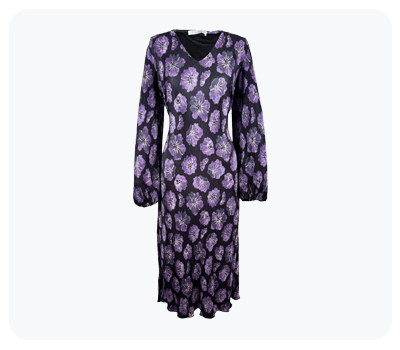
Like this dress that I bought for €130 the day before a wedding because the weather ended up being shitty and my original dress was strapless and made for a warm August day:
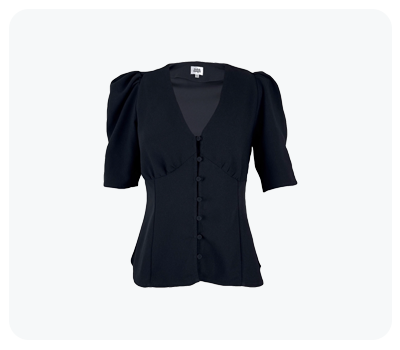
And this shirt that I didn’t even really like but didn’t look at the price before I bought it because I never imagined it would cost €120 but it did and I have too much pride to back down (lol):
buying with resale / return intent
There seem to be more and more of us who buy something we know we’ll only wear once, driven by the “I can resell this” mindset.
The truth is, you probably won’t resell it. Odds are not in your favor.
Vinted has more than a billion listings. H&M and ZARA alone account for almost 200 million of them. Market analysts are now calling the main categories a "red ocean." Meaning, everyone is drowning.
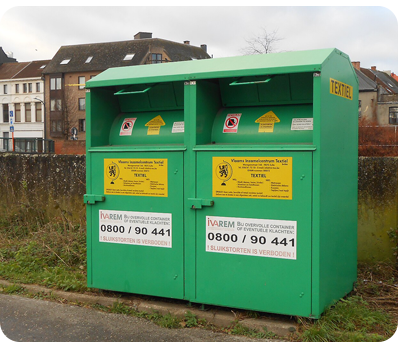
Your resale plan is also the plan of 75 million other people on the same app. So most items just sit there. The ones that don't sell eventually end up in what are essentially clothing dumpsters (kledingcontainer), which (if you've been following Dutch news) you now know is also a whole thing. And not a good one.
And if you’re one of those women who wear something with the tags still on so you can return it later, I already know I don’t like you.
enter demat (obviously)
Long story short, we have a long way to go in terms of sustainability and achieving circularity in the fashion industry. It’s far from perfect. Demat also isn’t perfect, but we’re trying really hard to play a positive role.
And if one thing is certain: you can’t shop your way out of a shopping problem. You can only buy less. Or change the way you shop entirely. Which is hard, but not impossible.
Demat is a shared closet. Monthly membership, borrow things, wear them, give them back, borrow something else. You never actually own most of it. Unless you love it. Then you can buy it for a very fair price. And in any case, you helped to extend the lifecycle of the items borrowed. Yay!
And to make things clear: I am by no means an expert on sustainability. To me, demat is practical by choice, sustainable by chance.
We’re trying to let you have your cake and eat it, too. “Shop” as much as you want, wear new (to you) things all the time, and avoid a lot of the negative consequences associated with traditional shopping (too many things in your closet, wasted money on things you never wear, etc.).
And our solution is cheaper and more convenient than the version I kept failing at on Vinted.
The end.
Thank you for your attention to this matter.